

Articular Cartilage Injury (Knee)
Cartilage Injuries in Colorado Springs, CO
Cartilage injuries of the knee can cause pain, swelling, stiffness, catching, and difficulty with normal movement. Damage to the articular cartilage may occur following a sports injury, fall, accident, or other trauma, and cartilage can also become damaged over time because of degenerative changes. Knee cartilage injury treatment in Colorado Springs, CO is tailored to the location and extent of the cartilage damage, the patient's symptoms, activity level, and overall condition of the knee.
Dr. John C. Redfern, MD provides orthopaedic care for patients in Colorado Springs with knee injuries and conditions affecting the cartilage. Depending on the injury, evaluation may include a physical examination and appropriate imaging to determine the extent of cartilage damage and identify any associated problems involving the meniscus, ligaments, or other knee structures.
Treatment options vary from conservative management and rehabilitation to arthroscopic or other cartilage procedures for appropriately selected patients. When surgery is considered, the goal is to address the cartilage defect, improve knee function, and help reduce symptoms while taking the patient's individual needs and long-term joint health into account.
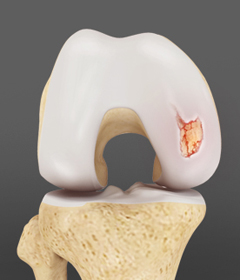
What is Articular Cartilage?
Articular or hyaline cartilage is the tissue lining the surface of the two bones in the knee joint. Cartilage helps the bones move smoothly against each other and can withstand the weight of the body during activities such as running and jumping. Articular cartilage does not have a direct blood supply to it so has little capacity to repair itself. Once the cartilage is torn it will not heal easily and can lead to degeneration of the articular surface, leading to the development of osteoarthritis.
The damage in articular cartilage can affect people of all ages. It can be damaged by trauma such as accidents, mechanical injury such as a fall, or from degenerative joint disease (osteoarthritis) occurring in older people.
What are the Treatment Options for Articular Cartilage Injury?
Patients with articular cartilage damage experience symptoms such as joint pain, swelling, stiffness, and a decrease in range of motion of the knee. Damaged cartilage needs to be replaced with healthy cartilage and the procedure is known as cartilage replacement. It is a surgical procedure performed to replace the worn out cartilage and is usually performed to treat patients with small areas of cartilage damage usually caused by sports or traumatic injuries. It is not indicated for those patients who have advanced arthritis of the knee.
Cartilage replacement helps relieve pain, restore normal function, and can delay or prevent the onset of arthritis. The goal of cartilage replacement procedures is to stimulate the growth of new hyaline cartilage. Various arthroscopic procedures involved in cartilage replacement include:
- Microfracture
- Drilling
- Abrasion Arthroplasty
- Autologous chondrocyte implantation (ACI)
- Osteochondral Autograft Transplantation
Microfracture: In this method, numerous holes are created in the injured joint surface using a sharp tool. This procedure stimulates a healing response by creating a new blood supply. Blood supply results in the growth of new cartilage.
Drilling: In this method, a drilling instrument is used to create holes in the injured joint surface. Drilling holes creates blood supply and stimulate the growth of new cartilage. Although the method is similar to microfracture, it is less precise and the heat produced during drilling may damage other tissues.
Abrasion Arthroplasty: High-speed metal-like object is used to remove the damaged cartilage. This procedure is performed using an arthroscope.
Osteochondral Autograft Transplantation: Healthy cartilage tissue (graft) is taken from the bone that bears less weight and is transferred to the place of the injured joint. This method is used for smaller cartilage defects.
Osteochondral Allograft Transplantation: A cartilage tissue (graft) is taken from a donor and transplanted to the site of the injury. Allograft technique is recommended if a larger part of cartilage is damaged.
Autologous Chondrocyte Implantation: In this method, a piece of healthy cartilage from another site is removed using the arthroscopic technique and is cultured in a laboratory. Cultured cells from a larger patch which is then implanted in the damaged part by open surgery.
Following the surgery, rehabilitation procedures are advised to facilitate healing and to restore the normal functioning of the joint.
Why Choose Dr. John C. Redfern for Cartilage Injuries in Colorado Springs?
Knee cartilage injuries can range from small focal defects to more extensive damage associated with degenerative joint conditions. Determining the appropriate treatment requires consideration of the location and severity of the cartilage injury as well as the patient's symptoms, activity level, and overall knee health.
Dr. John C. Redfern, MD has a particular interest in arthroscopic and open techniques for knee and shoulder disorders, along with specialized training in orthopaedic sports medicine. Patients in Colorado Springs, CO can receive an individualized evaluation and treatment plan based on the underlying cause of their knee symptoms.
When appropriate, treatment may include nonsurgical care, rehabilitation, or surgical procedures designed to address selected cartilage defects. Dr. Redfern can help determine which approach is most appropriate for your specific knee condition.
Cartilage Injuries FAQs
Schedule a Cartilage Injury Evaluation in Colorado Springs, CO
Knee cartilage damage can interfere with walking, exercise, sports, and everyday activities. If you are experiencing persistent knee pain, swelling, stiffness, or other symptoms associated with a possible cartilage injury, Dr. John C. Redfern, MD can evaluate your condition and discuss appropriate treatment options.
Contact the office to schedule an orthopaedic evaluation for knee cartilage injuries in Colorado Springs, CO. Your treatment plan can be tailored to the type of cartilage damage, your symptoms, activity goals, and the overall health of your knee.
Patient Services and Care Coordination
Our team can assist with appointments and general inquiries.